
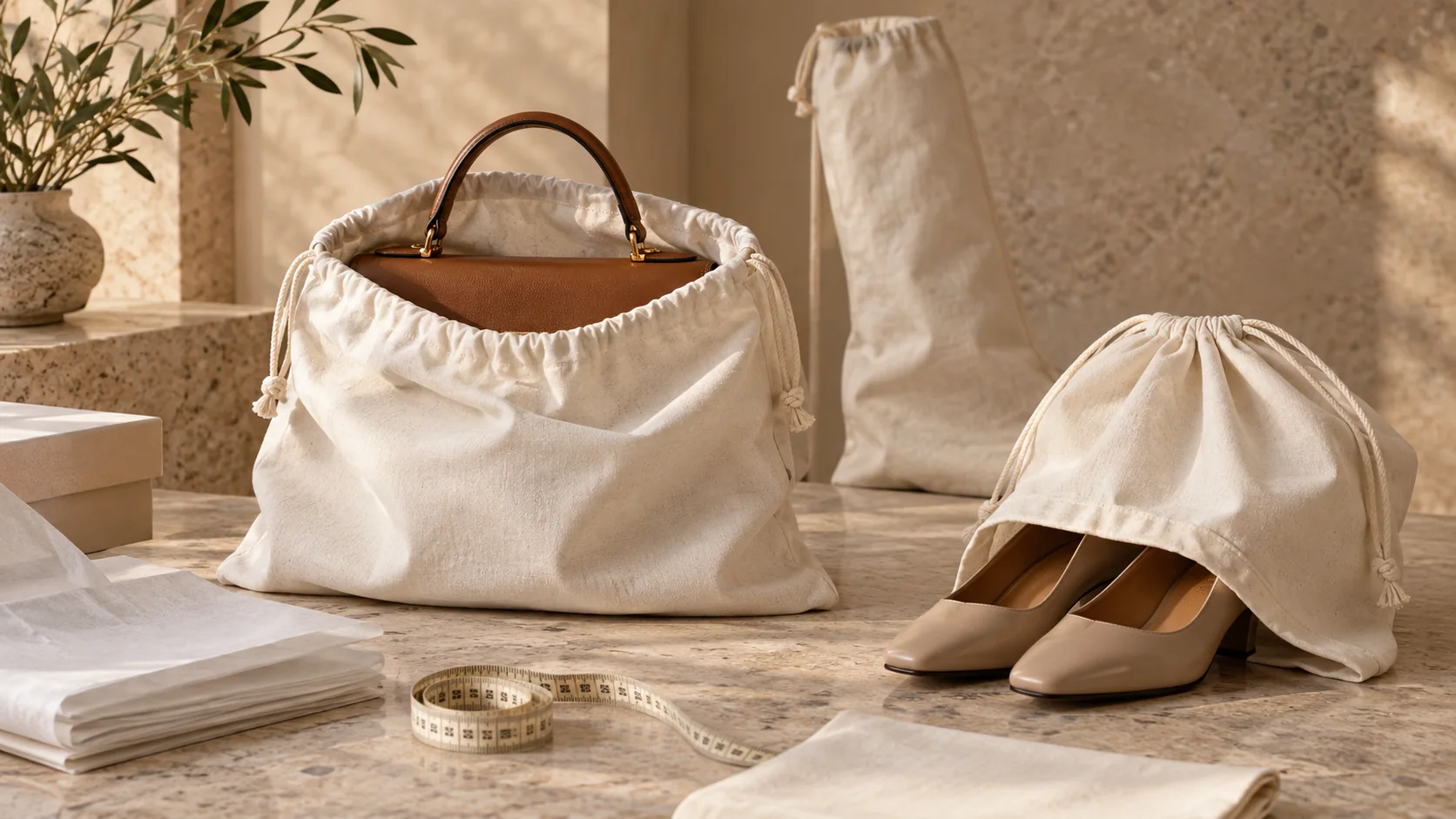
For B2B packaging buyers, a useful decision connects a clear brand requirement with a product format that can be sampled, inspected and delivered consistently. This guide shares practical considerations for buyers sourcing custom fabric packaging bags.
Measure The Product Before Choosing A Dust Bag
| Product type | Measure | Allow for | Suggested bag direction |
|---|---|---|---|
| Structured handbag | Width, height, depth and handle rise | Handle height, tissue and easy insertion | Drawstring or flap bag with a generous opening. |
| Pair of shoes | Pair width, length and stacked height | Sole thickness and pair separation | One shared or two individual drawstring bags. |
| Tall boots | Shaft height, widest calf and sole length | Fold avoidance and opening clearance | Longer drawstring or dedicated boot cover. |
| Small accessories | Packed width, height and depth | Hardware, tissue or box corners | Compact drawstring, envelope or flap pouch. |
Use this as a planning guide. Final production specifications should be confirmed against an approved sample and order requirements.
Dust Bag Material Comparison
| Material | Protection direction | Brand effect | Buyer check |
|---|---|---|---|
| Cotton | Breathable, reusable fabric layer | Natural and practical | Weight, lint, logo contrast and product contact. |
| Non-woven | Lightweight handling layer | Functional bulk packaging | Strength, surface and reuse expectation. |
| Velvet | Soft surface for selected premium items | Tactile and elevated | Pile direction, lint and logo method. |
| Satin | Smooth presentation layer | Polished and gift-ready | Sheen, snag risk and lining requirement. |
Use this as a planning guide. Final production specifications should be confirmed against an approved sample and order requirements.
Why Handbag And Shoe Brands Still Use Dust Bags
A dust bag is part of the product experience, not just an outer layer. It helps keep leather goods, shoes and accessories together during storage, fulfillment and gifting, while giving the brand a reusable touchpoint after purchase. The best custom dust bag is designed around the actual product footprint, the intended presentation and how customers will use it.
Start With The Finished Product, Not A Standard Bag Size
Measure the widest point, tallest point and depth of the handbag, shoe pair or boxed accessory. Include handles, straps, tissue, protective inserts and any item that will sit inside the bag. Then decide whether the dust bag should be closely fitted for a tidy premium reveal or have extra room for easy packing and repeat use. Product photos and dimensions give the factory a far better starting point than a rough size name.
Discuss a custom dust bag size →
Choose A Shape That Makes Packing Easy
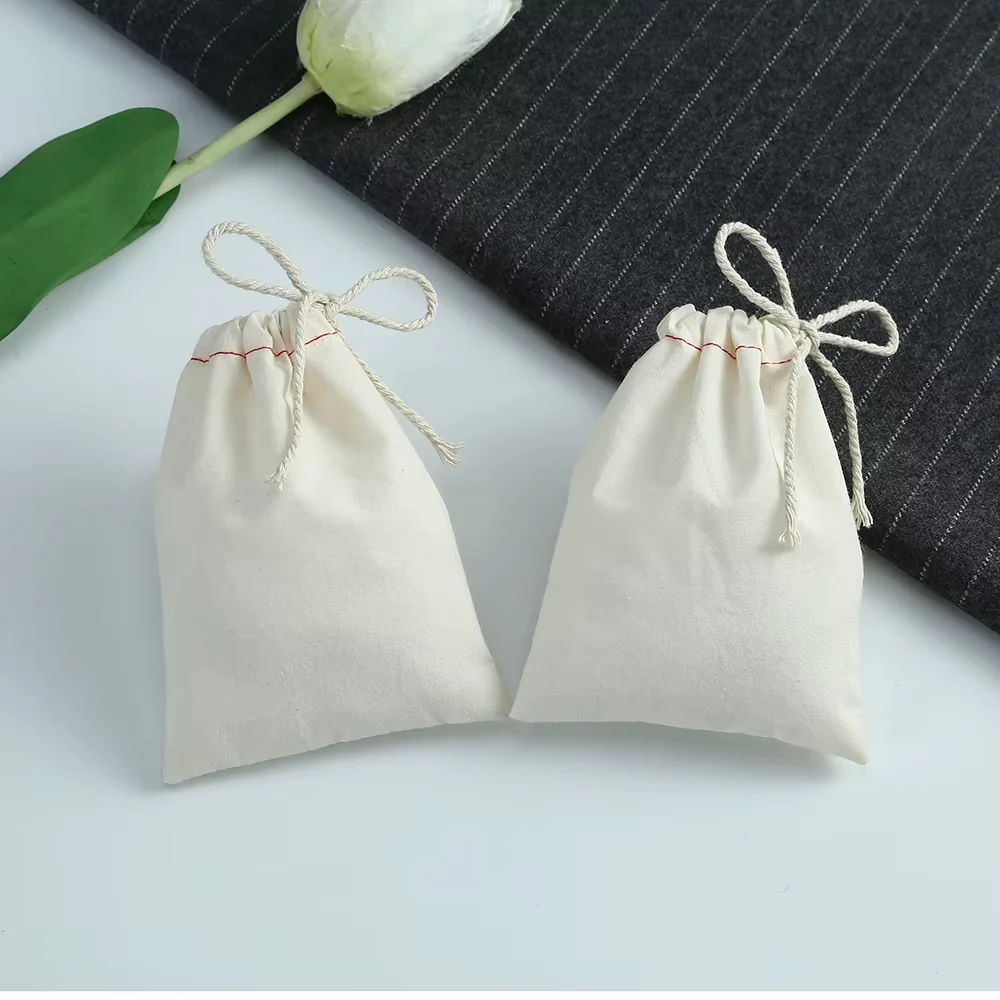
A flat drawstring pouch may suit small clutches, wallets and compact shoe styles. A taller or wider construction can better accommodate tote handles, boots, larger handbags or shoe boxes. Consider the opening width as carefully as the finished width: a bag can look correct on paper but still be inconvenient if the product cannot move through the opening comfortably.
Cotton, Velvet Or Satin: Which Fabric Fits The Product?
Cotton can support a natural, reusable and practical brand direction. Velvet is often considered when a softer hand feel and more protective premium presentation are priorities. Satin can create a smooth, gift-ready finish for lighter accessories and promotional sets. The right fabric depends on surface sensitivity, target price point, desired reuse and the logo treatment, so a physical sample remains the best final check.
Plan The Drawcord And Closure Around Daily Use
Drawstrings keep the construction flexible and familiar, but the cord material, colour, length and gathered top change the final look. A larger product may need a more generous opening, while a compact luxury accessory may benefit from a neater proportion. If the bag will be retained by customers for storage, test whether it opens smoothly, closes evenly and feels appropriate for the product.
Review bag construction options →
Keep The Logo Clear Without Overcrowding The Bag
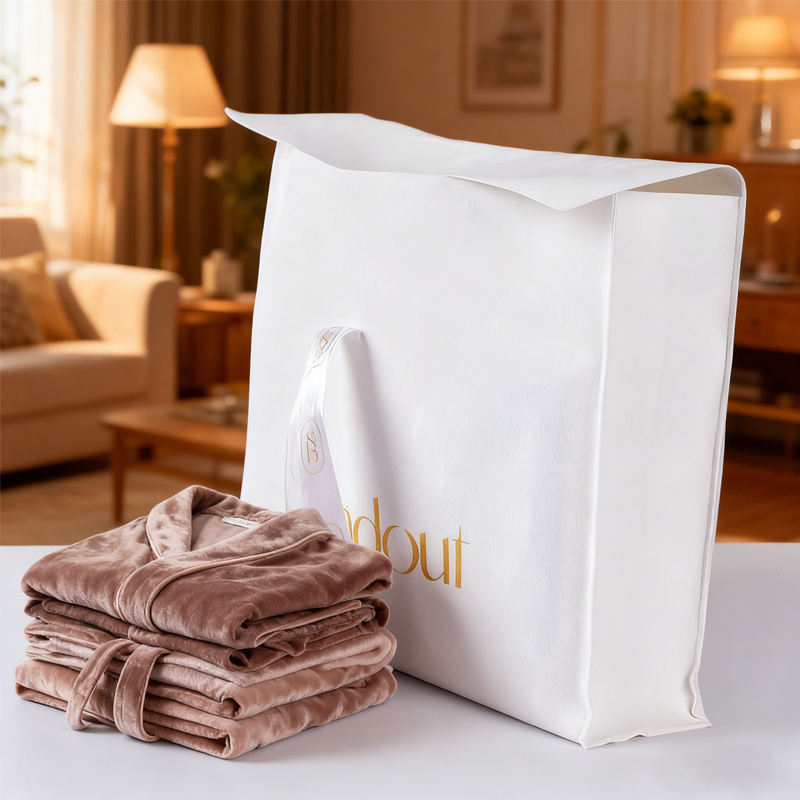
The logo should be considered with the bag proportion, seams, drawcord channel and the way the item sits inside. A centered front logo often works well for simple dust bags, but a lower or corner placement can suit another construction. Share vector artwork, intended logo size and colour reference so the printable area can be checked before sampling.
What To Check On A Dust Bag Sample
Use the sample with the real product. Check fit, ease of packing, fabric contact, seam strength, closure movement, logo visibility and the way the dust bag appears beside a box or on a retail shelf. This turns a general dust bag idea into an approved production reference that both buyer and manufacturer can follow.
Measure The Product At The Points That Change The Bag
For handbags, measure the widest body point, height, depth, handle rise and any strap or hardware that must remain inside. For shoes, measure the pair together if they share one bag, including sole thickness and the way the pair nests. For boots, include shaft height, the widest calf point and sole length. For accessories, measure the completed packed item, not just the product before tissue, card or box is added.
Leave practical room for product thickness, handles, a drawstring gathered top and easy insertion. A dust bag that is too close-fitting may wrinkle the product or frustrate packing staff; one that is too large can look unstructured and allow unnecessary movement. The final size should be confirmed with a physical product or complete dimension drawing. Before bulk production, conduct a filled sample test rather than treating a nominal size as an absolute standard.
Use the custom bag size guide | Explore Dust Bag applications →
Choose Material And Closure For The Protection Job
Cotton dust bags can support a breathable, natural and reusable presentation for handbags, shoes and leather goods. Non-woven material may suit lightweight functional handling. Velvet can offer a soft tactile layer for selected premium accessories, while satin can create a smoother gift-oriented finish. Material selection should consider product surface, expected reuse, brand direction, logo treatment and packing route rather than appearance alone.
Single or double drawstrings can suit different opening and gathered-top expectations. A flap or envelope construction can create a flatter form for selected accessories, while a zipper may suit contained storage where it does not risk product contact. Test how the closure moves around the real product and whether it leaves enough clearance for handles, straps and protective tissue.
Browse Cotton Bags | Browse Velvet Bags | Browse Satin Bags | Compare closures →
Inspect Product Contact, Sewing And Logo Details
Sample and bulk checks should cover fabric cleanliness, colour transfer expectations, rubbing, snagging or pulls where relevant, loose threads, seam neatness, drawcord operation and agreed finished measurement points. The approved sample defines what should be compared; it does not create an unsupported claim that every material is suitable for every surface. If the product has a sensitive finish, test actual contact and packing conditions before approving the final construction.
Plan the logo with the visible front panel, seams, drawcord channel and filled shape. Provide usable artwork and target logo size. Check the result flat and with the product inside, because a bag may distort or fold around a structured handbag or a pair of shoes. Agree practical dimensional tolerance, packing count and inspection points in writing before bulk production.
Plan Brand Projects And Bulk Packing Separately
A brand project may need a selected material, precise logo position, coordinated tissue, individual protective sleeves, special labels or gift-box assembly. A standard bulk order may use grouped inner packs and simpler carton handling. Neither route is automatically better; the relevant requirements should be stated in the RFQ so the supplier can plan production and packing around the receiving workflow.
For transport, clarify whether goods must lie flat, be individually protected, be kept free from dust or moisture exposure, carry carton marks, be counted by colour or size, or arrive ready for a co-packer. Trial packing can reveal whether a soft bag becomes compressed, creased or contaminated in a master carton. Discuss the outer packing plan before the order is packed, not after goods are finished.
Buyer And RFQ Checklist For Dust Bags
A workable RFQ includes photos of the handbag, shoes, boots or accessories; complete packed measurements; intended dust bag use; preferred material and closure; logo artwork and placement; target quantity; sample request; individual packing or carton requirements; destination and in-hand date. Identify whether the buyer needs one bag for a shoe pair or separate bags, and whether handles, straps, boxes or tissue stay inside.
This guide focuses on product-specific dust bag specification. The supplier should use the brief to recommend a trial size and construction, then the buyer should approve the filled sample as the reference for bulk production. That approach is safer than relying on a generic named size or a product image without measurements.
BUYER FAQ
Frequently Asked Questions
How Should I Measure A Handbag Or Shoe For A Dust Bag?
Measure the complete packed product at its widest, tallest and deepest points, including handles, straps, tissue, inserts or box. Confirm the final bag through a filled sample before bulk production.
Which Material Works For A Custom Dust Bag?
Cotton, non-woven, velvet and satin serve different protection and presentation directions. Choose based on the product surface, expected reuse, logo treatment and packing route, then test actual product contact.
Why Must A Dust Bag Be Tested With The Real Product?
A real product test confirms opening clearance, fit, handle space, closure operation, fabric contact and the finished visual proportion. A flat sample alone cannot verify these points.
Can Dust Bags Be Individually Packed?
Yes, if the requirement is defined in the project brief. Individual sleeves, labels, grouped inner packs and carton marks change the packing plan and should be included in the quotation request.
What Should A Dust Bag RFQ Include?
Send product photos and packed dimensions, material and closure direction, logo artwork, quantity, sample need, packing requirements, destination and target delivery date.
NEXT STEP
Discuss Your Custom Packaging Project.
Send your size, material, logo and quantity requirements. Our team can help you compare suitable options and prepare a practical quotation.
Request A Quote