
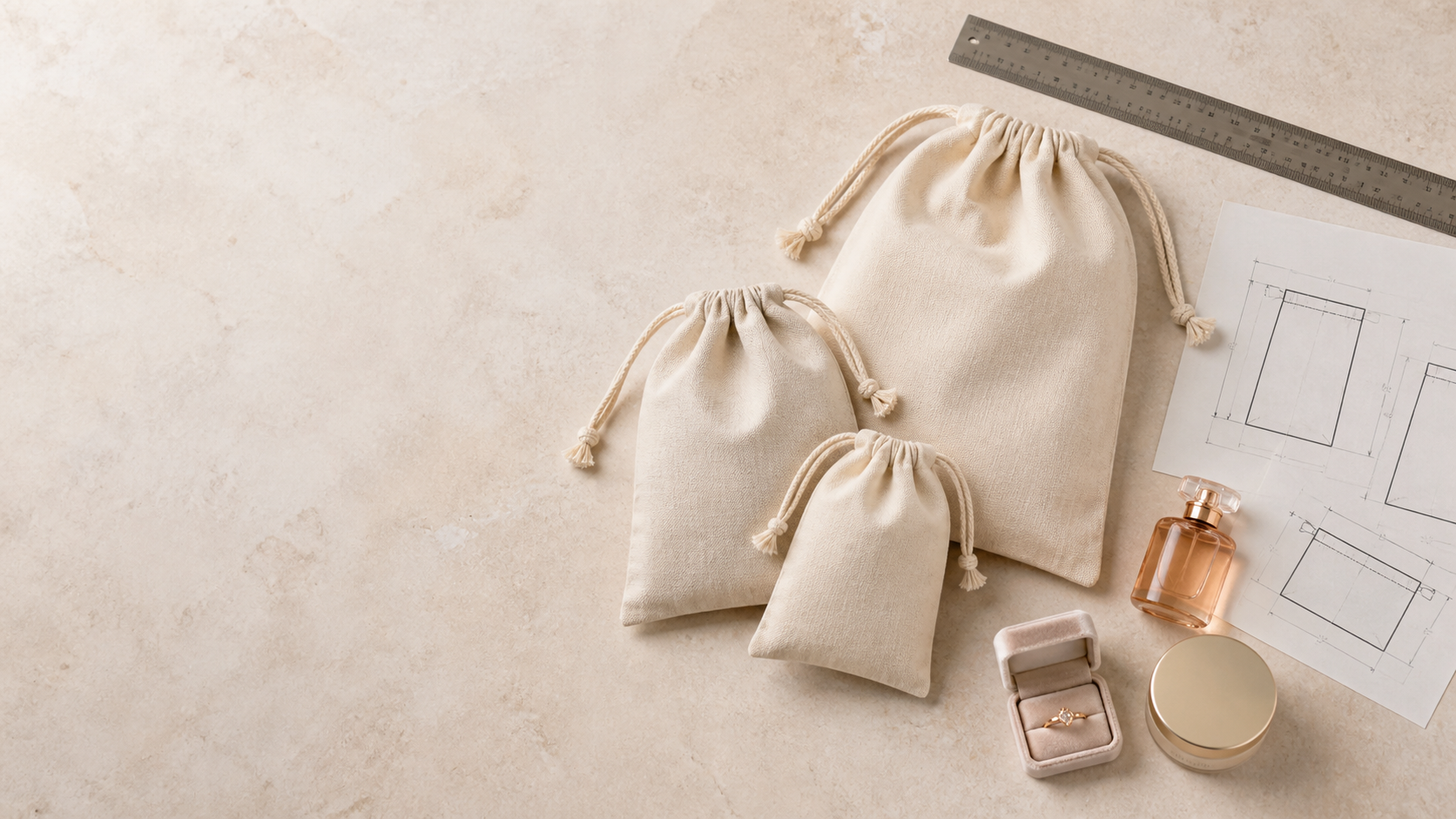
For B2B packaging buyers, a useful decision connects a clear brand requirement with a product format that can be sampled, inspected and delivered consistently. This guide shares practical considerations for buyers sourcing custom fabric packaging bags.
Practical Planning Reference
| Input | Example | Planning result |
|---|---|---|
| Packed product | 10 cm W × 14 cm H × 3 cm D | Measure the item with its box, insert and wrap included. |
| Flat pouch starting point | Width = product width + side allowance | Start from 10 cm + 2 cm = 12 cm, then test the real opening. |
| Drawstring height starting point | Height = product height + top allowance | Start from 14 cm + 5 cm = 19 cm so the channel can gather above the product. |
Use this as a planning guide. Final production specifications should be confirmed against an approved sample and order requirements.
What Measurements Should You Send A Bag Manufacturer?
Measure the fully packed product at its widest, tallest and deepest points. Include the retail box, insert, ribbon, cap, protective wrap or any accessory that will go inside the pouch. A loose product measurement is not enough when the final item will be packed as a set. Product photos next to a ruler also help a manufacturer understand its shape and the way it needs to enter the bag.
How Much Extra Room Does A Drawstring Pouch Need?
There is no universal allowance because the right amount depends on the product shape, fabric and desired presentation. Use this planning formula as a starting point only: finished flat width ≈ packed product width + side allowance; finished height ≈ packed product height + top allowance. In the worksheet below, a 10 × 14 × 3 cm boxed item begins as a 12 × 19 cm flat drawstring sample, but the final measurement must be approved with the actual packed item. A jewelry box may need a neat, close fit, while a bottle or a soft apparel item needs room to pass through the opening and gather comfortably at the top.
See drawstring size and logo guidance | View cotton drawstring bags →
When Should You Choose A Gusseted Bag?
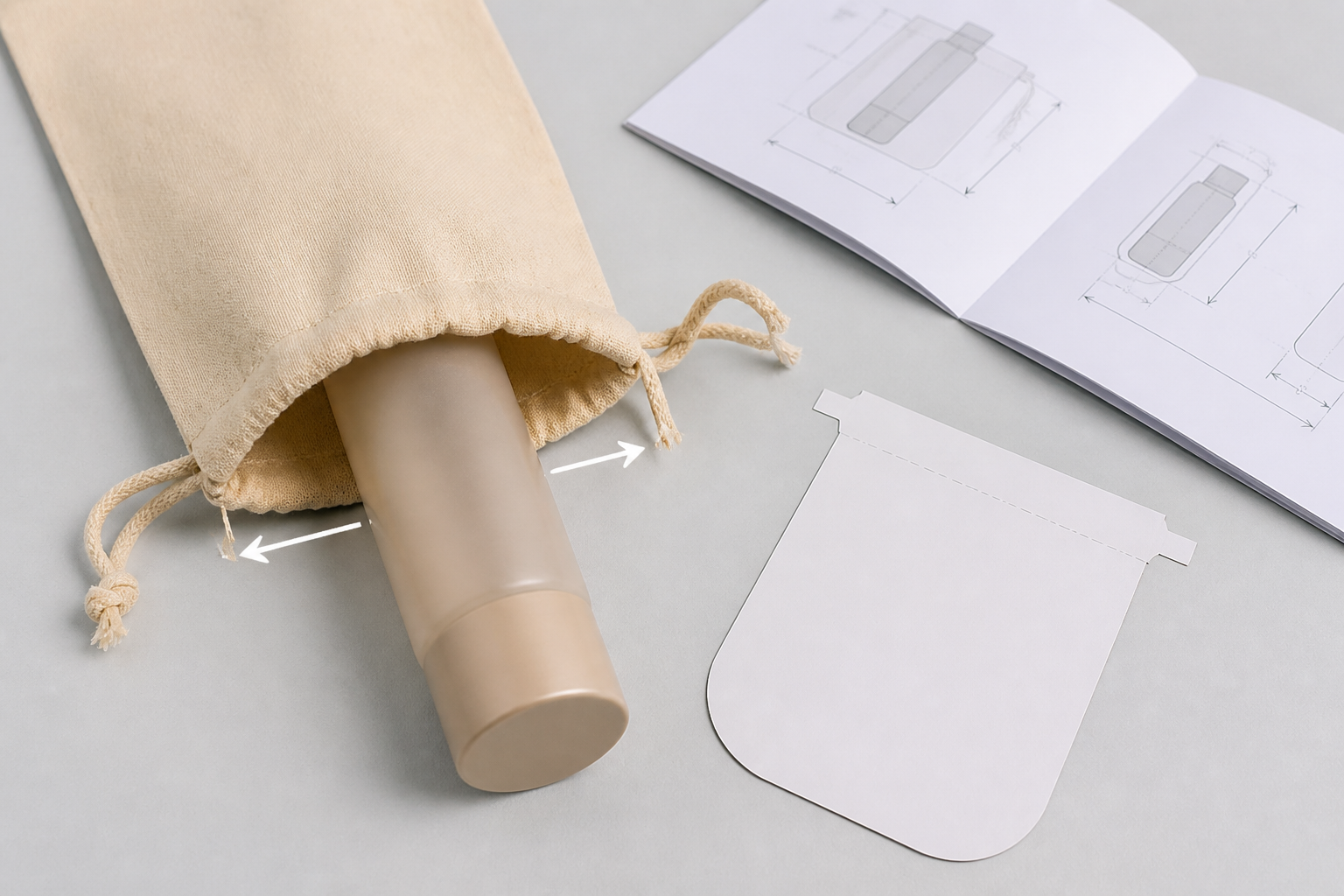
A flat pouch is often suitable for slim items, cards, scarves and small accessories. A gusset adds depth for boxed products, bottles, folded apparel, cosmetic sets or several items packed together. It can improve usable volume, but it also changes the bag silhouette, seam construction and logo area. Share the packed-product dimensions so the construction follows the real use.
Why Does The Finished Opening Matter?
The body size and the usable opening are not the same. A drawstring channel, zipper curve, flap or lining can reduce the space available when the bag is opened. Check that the product can be inserted without forcing the fabric, and that the chosen closure can still operate smoothly once the bag is filled.
What Should Be Tested In A Size Sample?
Put the real finished product inside, close the pouch, remove it again and photograph the result from the front and side. Check the fit, the gathered top or closure, any visible product edges and the presentation at point of sale. Record the approved finished dimensions together with fabric, closure and logo placement so production uses one clear reference.
NEXT STEP
Discuss Your Custom Packaging Project.
Send your size, material, logo and quantity requirements. Our team can help you compare suitable options and prepare a practical quotation.
Request A Quote