
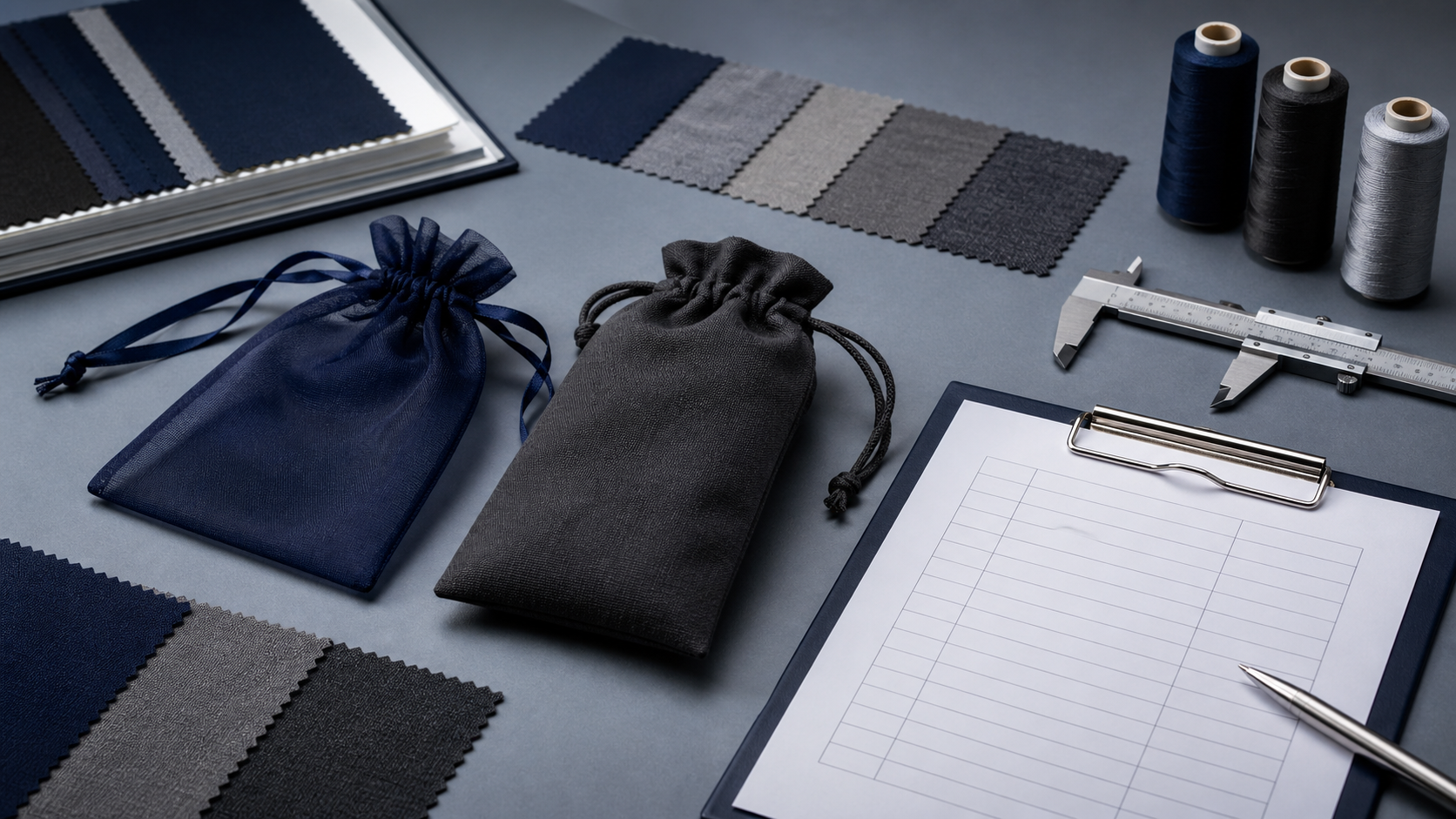
For B2B packaging buyers, a useful decision connects a clear brand requirement with a product format that can be sampled, inspected and delivered consistently. This guide shares practical considerations for buyers sourcing custom fabric packaging bags.
What Is The Purpose Of A Custom Fabric Bag Sample?
A sample is the practical test of the agreed brief. It shows whether the actual fabric, finished size, construction, closure and logo work together around the product. It is not just a display piece: it should be filled, opened, closed and viewed in the same way the final customer or packing team will use it.
Which Product-Fit Checks Matter Most?
Test the real packed item, including its box, insert, protective wrap and any accessories. Check whether it passes through the opening without straining the fabric, whether the bag closes cleanly and whether the finished shape looks considered from the front and side. For a drawstring pouch, inspect the gathered top; for a zipper pouch, check the zipper movement while the pouch is filled.
Read the size calculation FAQ →
How Should Material And Colour Be Reviewed?
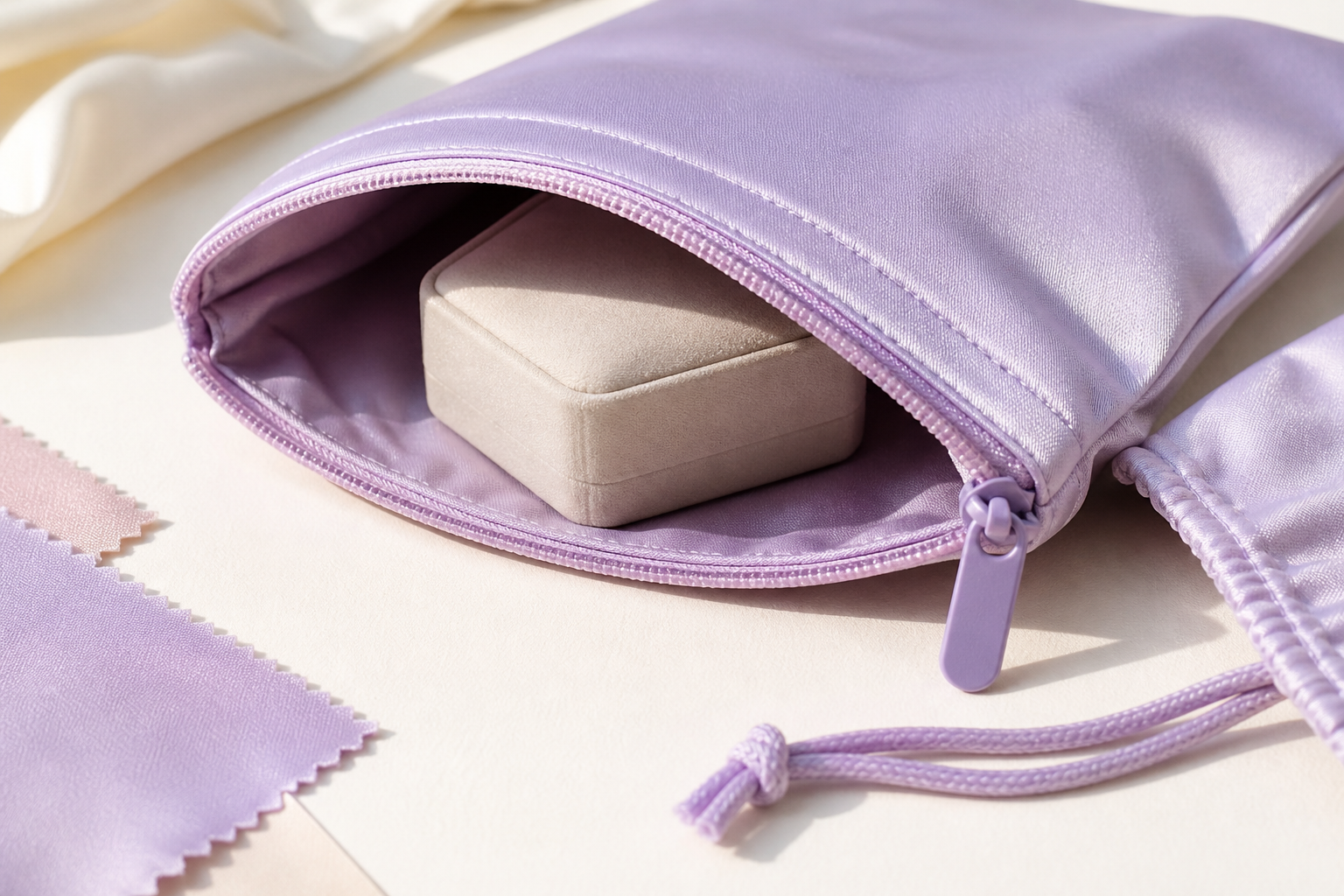
Compare the sample with the required hand feel, colour reference and intended brand setting. Fabric sheen, pile, transparency and weave can look different under showroom, warehouse and retail lighting. Review the sample beside the actual product and any outer box or gift card, then record any changes before bulk production is released.
What Should Be Checked On Seams, Closures And Logos?
Look at stitch consistency, loose threads, symmetry, seam position, drawcord ends, zipper operation, lining and logo placement. The exact priorities depend on the bag format, but the key is to check the working bag rather than isolated components. If a logo, label or closure sits near a seam, inspect it with the pouch filled because tension can make small placement issues more visible.
How Do You Turn A Sample Into A Production Standard?
Save photos of the approved sample, the finished measurements, material reference, logo artwork and placement, closure details, packing method and any agreed tolerance or inspection requirement. Share one consolidated approval record with everyone involved. A clear record reduces interpretation changes between sampling, production and final packing.
NEXT STEP
Discuss Your Custom Packaging Project.
Send your size, material, logo and quantity requirements. Our team can help you compare suitable options and prepare a practical quotation.
Request A Quote