

For B2B packaging buyers, a useful decision connects a clear brand requirement with a product format that can be sampled, inspected and delivered consistently. This guide shares practical considerations for buyers sourcing custom fabric packaging bags.
Practical Planning Reference
| Planning item | Formula | Example |
|---|---|---|
| Master-carton quantity | Inner packs × pieces per inner pack | 10 inner packs × 50 pouches = 500 pouches per carton. |
| Order carton count | Order quantity ÷ master-carton quantity | 5,000 pouches ÷ 500 = 10 cartons, before allowing for approved packing variations. |
| Gross-weight check | Carton tare + packed goods | Confirm after trial packing; do not estimate freight solely from a product photo. |
Use this as a planning guide. Final production specifications should be confirmed against an approved sample and order requirements.
Why Should Export Packing Be Planned Early?
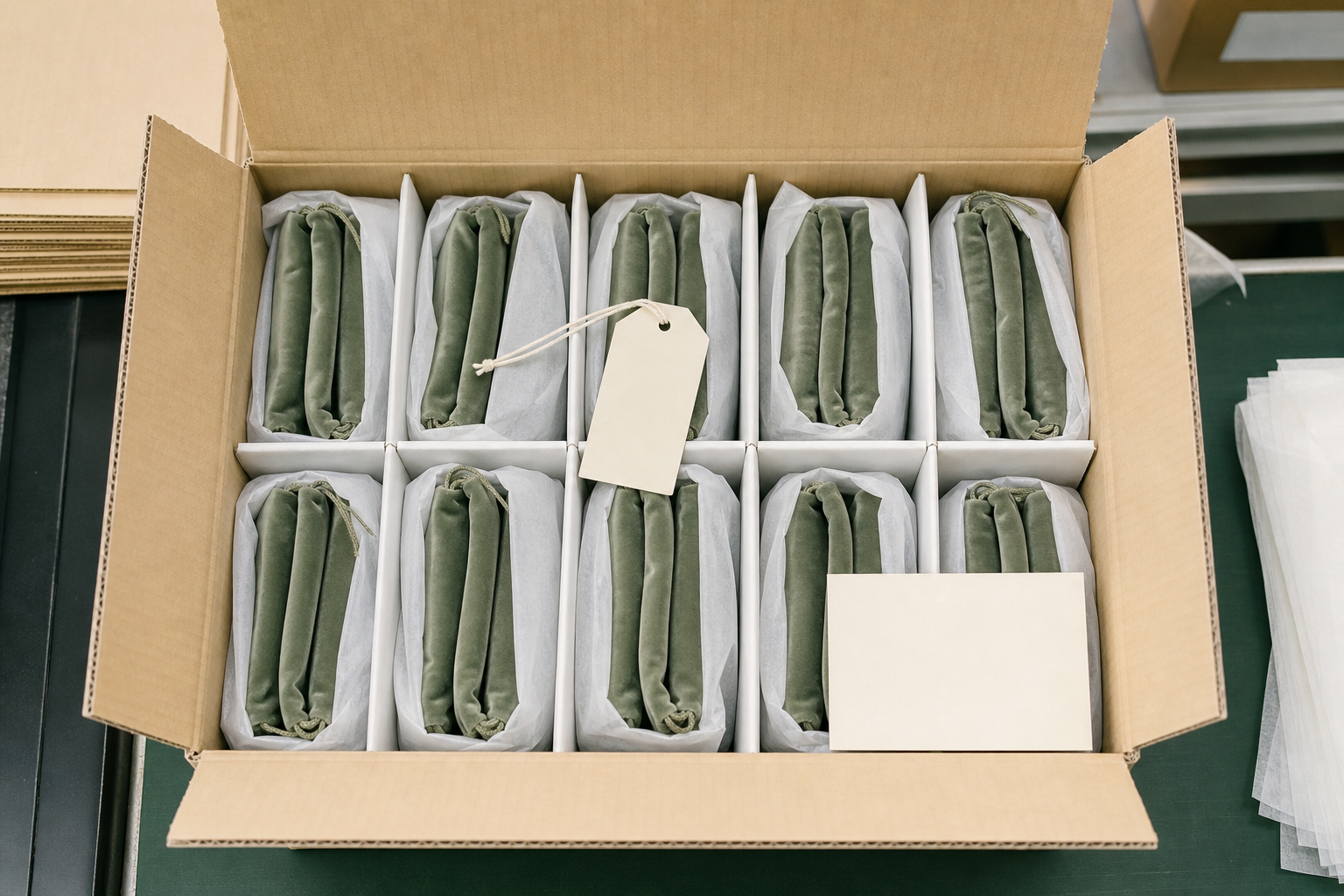
Packing affects product condition, carton efficiency, warehouse handling and the buyer's receiving process. A soft pouch can often be folded efficiently, while pouches with hardware, delicate finishes or retail presentation requirements may need extra protection. Discuss individual packing and carton expectations while the product specification is being confirmed, not after bulk production is complete.
When Is Individual Protection Worth Adding?
Individual tissue, sleeves, inserts or other protective layers can help prevent abrasion, transfer, tangling or crushing during transit and handling. The suitable method depends on the selected fabric, logo finish, closure and how the goods will be received or repacked. Specify whether the pouch will go straight to retail, into a gift set or to a fulfilment centre, because each route may need a different packing approach.
What Carton Details Should Buyers Confirm?
Confirm pieces per inner pack and master carton, whether the products may be compressed or must lie flat, and any limits imposed by your warehouse or courier. A transparent planning calculation is: master-carton quantity = inner packs × pieces per inner pack; required cartons = order quantity ÷ master-carton quantity. For example, 10 inner packs of 50 pouches produce 500 pieces per carton, so a 5,000-piece order begins with 10 cartons before any approved packing variation. Ask for planned outer-carton dimensions and gross weight after a trial pack, rather than estimating freight from a product photo. This information supports freight planning and helps the receiving team prepare space and handling procedures.
Prepare a delivery brief | Explore satin pouch formats →
How Should Labels And Carton Marks Be Handled?
Provide the exact label, barcode, carton-mark or purchase-order instructions early if your programme requires them. Confirm where labels should be placed and whether individual pieces, inner packs and master cartons need different identification. Use approved artwork or a written layout rather than relying on a description from memory.
What Final Checks Reduce Delivery Surprises?
Before dispatch, reconfirm the approved sample reference, final quantity, packing count, carton marking, destination details and handover timing. If the goods are being inspected, ensure the inspection point uses the same approved specification. A short pre-shipment checklist gives both sides a final opportunity to catch mismatched packing or documentation before the shipment leaves.
NEXT STEP
Discuss Your Custom Packaging Project.
Send your size, material, logo and quantity requirements. Our team can help you compare suitable options and prepare a practical quotation.
Request A Quote