
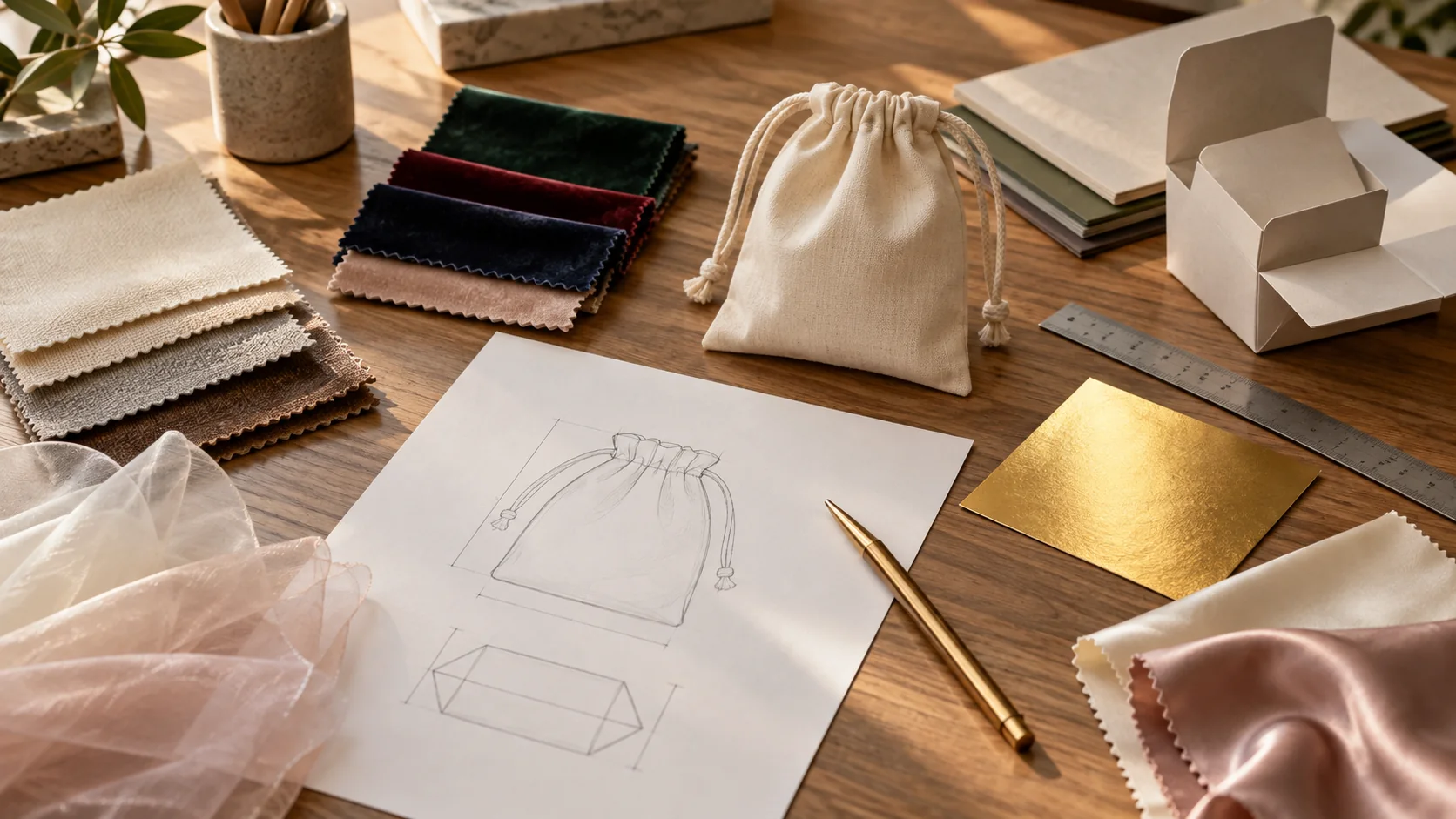
For B2B packaging buyers, a useful decision connects a clear brand requirement with a product format that can be sampled, inspected and delivered consistently. This guide shares practical considerations for buyers sourcing custom fabric packaging bags.
What Shapes A Custom Fabric Bag Quote
| Cost factor | How it changes the quote | Buyer action |
|---|---|---|
| Material and colour | Fabric construction, weight, colour and availability change purchasing and handling | Name the material direction and send a colour reference. |
| Size and construction | More material, gussets, lining, closures and sewing steps can change the route | Provide finished dimensions and a product photo. |
| Logo and components | Method, colours, artwork detail, labels and hardware require different preparation | Send usable artwork and identify the intended finish. |
| Quantity and packing | Quantity, inner packs and individual protection affect production and packing planning | Request comparisons on one fixed specification. |
Use this as a planning guide. Final production specifications should be confirmed against an approved sample and order requirements.
Simple Versus Complex Specifications
| Specification area | More basic direction | More complex direction | Why it matters |
|---|---|---|---|
| Body | Single material and standard colour direction | Special finish, lining or mixed materials | Changes material sourcing and sewing. |
| Closure | Simple drawstring | Zipper, flap, snap or hardware | Changes components and operations. |
| Branding | One clear print position | Detailed multi-process or embroidered mark | Changes setup, placement and review. |
| Packing | Grouped inner packs | Individual sleeves, labels or gift-box assembly | Changes handling and carton planning. |
Use this as a planning guide. Final production specifications should be confirmed against an approved sample and order requirements.
RFQ Fields For A Faster Quote
| Field | Why it is needed | Useful evidence |
|---|---|---|
| Product and size | Confirms usable pouch dimensions | Photo, packed measurements and box details. |
| Material and finish | Sets the sourcing direction | Swatch, reference photo or written preference. |
| Logo | Allows a suitable method and area to be assessed | Vector artwork and desired width. |
| Quantity and delivery | Sets planning and packing assumptions | Target quantity, country and in-hand date. |
Use this as a planning guide. Final production specifications should be confirmed against an approved sample and order requirements.
The Direct Answer: There Is No Honest One-Photo Price
A custom fabric bag cannot be quoted accurately from a product photo alone because the visible silhouette does not reveal the material construction, finished dimensions, lining, closure, logo method, packing route or order quantity. Two pouches that look similar online can require different fabric, sewing operations, components and sample work. A useful quotation explains the specification on which it is based rather than promising a universal lowest price.
For B2B buyers, the goal is not to find a fixed internet number. It is to prepare one clear requirement so suppliers can quote the same product. When the material, size, logo, quantity and packing are held constant, the buyer can compare assumptions fairly and see which detail changes the cost before a sample is approved.
Browse custom bag formats | Start a custom packaging project →
Material, Weight And Colour Set The Starting Point
Cotton, velvet, organza and satin have different constructions, surface behavior and sourcing routes. Within one category, fabric weight, pile or weave, finish, backing and colour can change the amount of material required and how the pouch is made. A heavier cotton or a lined velvet pouch may serve a different product need from a lightweight organza favor bag; neither is automatically the better choice.
Colour should be specified early because it affects available material options, logo contrast and sample review. Rather than assuming a digital image represents the final fabric, provide a colour reference and review the selected material in a sample. The right question is whether the material supports the product and brand direction, not which fabric name appears cheapest in isolation.
Compare Cotton Bags | Compare Velvet Bags | Compare Organza Bags | Compare Satin Bags →
Size, Material Use And Construction
Finished width, height, depth, gusset and drawstring channel determine material use and sewing sequence. A larger bag normally needs more body material, but construction can be equally important. A compact pouch with a lining, reinforced corners, a zipper, flap or snap can require more operations than a larger flat drawstring bag. Product dimensions, not a generic bag name, should set the starting point.
For planning, measure the packed product at its widest, tallest and deepest points, including inserts, handles, caps, tissue or a box. Then allow room for insertion, removal and the selected closure. The dimensions should be tested in a sample, because usable space differs from flat-cut dimensions. Typical reference only; final specifications should be confirmed through sampling.
Closures, Linings And Logo Treatment
Drawstrings, zippers, flaps, snaps, lining, labels, ribbon and hardware each introduce materials or operations that can affect a quote. The buyer should identify what is functional and what is presentation-led. A pouch intended for repeated customer use may need a different closure from a pouch used once in a gift box. Defining this purpose prevents unnecessary complexity or missing functionality.
Logo cost is shaped by the method, artwork detail, number of colours, visible size, placement and the selected fabric. Screen print, transfer, foil and embroidery should be chosen for the intended effect and technical suitability, then tested on the actual pouch material. A clear one-colour mark in a planned area is a different requirement from a detailed multi-process decoration.
Quantity, Sampling And Custom Components
Quantity influences how material purchasing, setup and production planning are approached, but it does not create one universal MOQ. A supplier needs the final specification before advising a realistic route. Sampling may involve material preparation, artwork setup or custom components, particularly when the buyer requests a new construction, special logo treatment, nonstandard colour or dedicated packing.
Use the sample as a decision tool, not simply a pre-production formality. It lets the buyer confirm product fit, fabric surface, logo, closure and packing. If the sample reveals a needed change, update the quote assumptions before bulk production. This is more reliable than comparing a sample based on one specification with a bulk quote based on another.
Packing, Inspection And Freight Are Separate Decisions
Individual sleeves, barcodes, inserts, hangtags, inner packs, master-carton marks and special handling all shape the packing plan. They should be listed in the RFQ because they affect how goods are counted, protected and received. Inspection criteria or requested documentation may also require planning; state them before production rather than assuming they can be added after the sample is approved.
A transparent planning formula is: total procurement budget = product amount + sample or artwork preparation + custom packing + inspection or documentation + freight and related charges. This formula explains the budget structure only. It is not a price quote, and the final quotation should be based on the confirmed specification, destination and commercial terms. Freight and trade terms should be understood separately from the product quotation.
Optimise Cost Without Quietly Reducing Value
Cost optimisation works best when the buyer protects the details customers will notice: product fit, material feel, closure performance, readable branding and clean packing. Ask the supplier to show alternatives on the same product brief, such as a standard colour direction, a simplified logo process, a shared size range or a different inner-pack arrangement. Each alternative should state what changes and what does not.
Avoid comparing a lower figure that removes an unmentioned lining, changes the material, reduces the logo treatment or assumes another packing route. An approved sample and written specification give the buyer a reference for evaluating alternatives without accidentally changing the finished product.
RFQ Checklist For A Useful Quotation
A quotation-ready RFQ includes the product photo and packed dimensions, intended bag use, material and colour direction, finished size, closure, lining if needed, logo artwork and placement, quantity, sample requirement, packing and labelling needs, inspection requirements, destination, trade terms and required delivery date. If something is not final, label it as an option rather than leaving it unstated.
This approach lets a custom packaging bag supplier identify the questions that matter, suggest a workable construction and explain which choices affect the quote. It gives the buyer a clearer basis for comparing suppliers without relying on invented unit prices or promises that cannot be verified.
BUYER FAQ
Frequently Asked Questions
Why Is A Custom Fabric Bag Not Priced From One Photo?
A photo does not confirm the material, dimensions, lining, closure, logo method, quantity or packing. Those inputs are required to prepare a comparable product quotation.
What Has The Largest Effect On A Custom Bag Quote?
Material, finished size, construction, logo treatment, quantity and packing are common cost drivers. Their relative impact depends on the exact project specification.
How Can Buyers Optimise Cost Without Quietly Changing Quality?
Compare stated alternatives on one fixed brief and confirm changes in a sample. Protect product fit, material direction, closure function, branding and packing requirements that matter to the finished use.
Do Freight And Product Cost Mean The Same Thing?
No. Product quotation, packing, inspection or documentation, freight and commercial terms should be understood as related but separate parts of the procurement plan.
What Should I Send For A Comparable Quote?
Send product dimensions, material and construction preference, logo artwork, quantity, packing requirements, destination and required delivery date. Include any sample or inspection needs.
NEXT STEP
Discuss Your Custom Packaging Project.
Send your size, material, logo and quantity requirements. Our team can help you compare suitable options and prepare a practical quotation.
Request A Quote